
Computing properties of quantum many-body systems in the thermodynamic limit is of central interest in condensed matter physics, yet classical methods face fundamental limitations for strongly correlated systems. Quantum computers offer a promising way forward, but current devices remain constrained in both qubit number and gate fidelity, restricting direct calculations to small system sizes far from the thermodynamic limit.
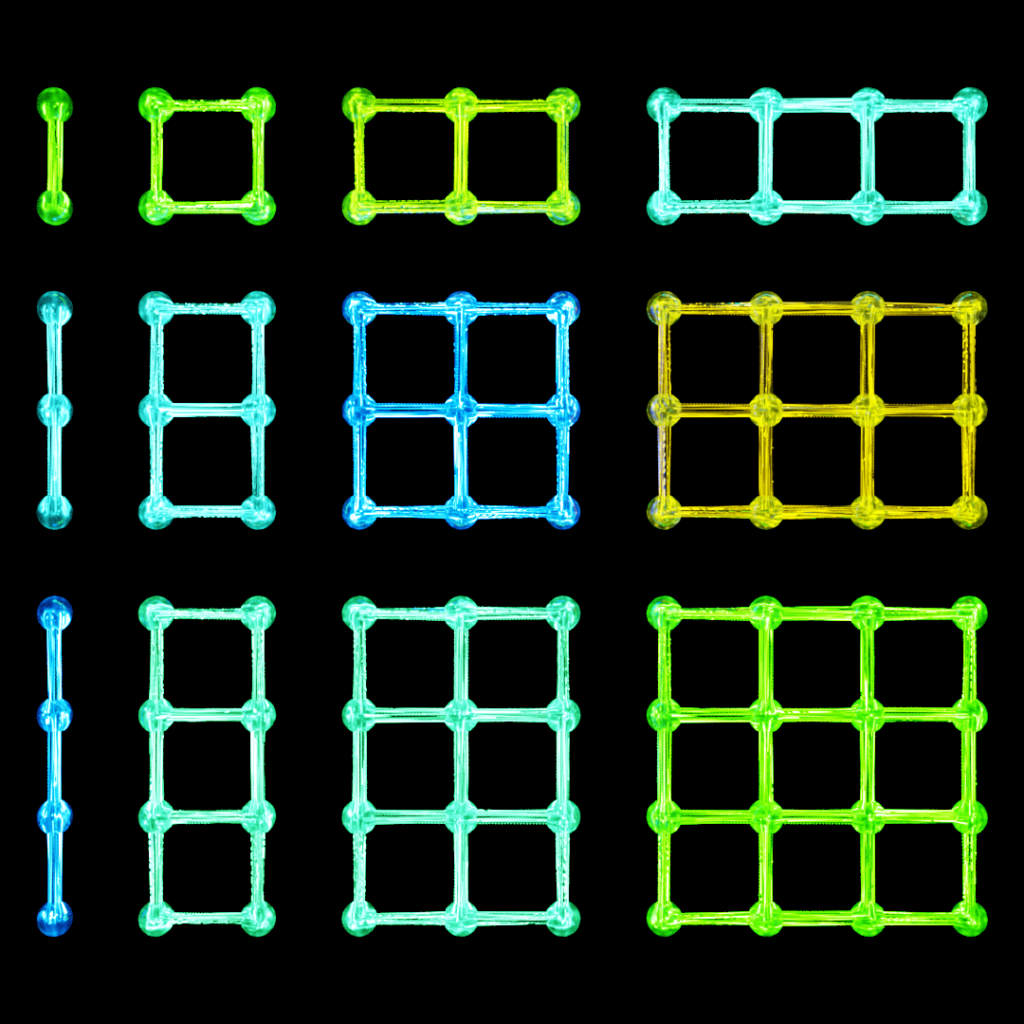
In this newly released pre-print by Lucas Marti, Sumeet, Stefan Wolf, K. P. Schmidt, and Michael J. Hartmann, we run a numerical linked-cluster expansion with a quantum algorithm (NLCE+QA), computing ground-state energies and one quasi-particle dispersions in the thermodynamic limit using a 20-qubit trapped-ion quantum processing unit (QPU). The NLCE+QA involves a non-linear transformation that amplifies measurement noise, making it a challenge on current NISQ devices.
We explore this challenge for the transverse-field Ising model in one dimension, on a ladder geometry, as well as in a longitudinal field in one dimension. For the quantum algorithm, we compare adiabatic state preparation (ASP), to a variational quantum eigensolver (VQE) trained on a classical device. The final expectation values are obtained from the QPU, using a novel alternative to the Hadamard test that we name the CX-test. We explore the regimes currently attainable on quantum devices and discuss the improvements needed for quantum computers to achieve results beyond classical reach.